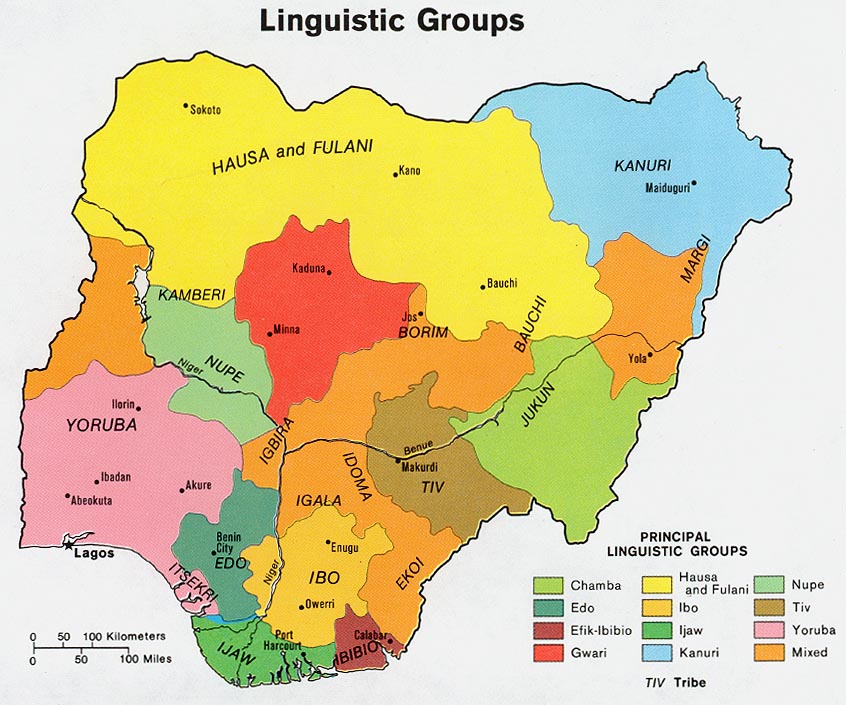
The Acipanci people are speakers of the Tirisino dialect, which belongs to the Cicipu language family. They call themselves Acipu and are known in Hausa as Acipawa. The Tirisino are one of several Cicipu dialect groups inhabiting northwest Nigeria, with their main settlements straddling the border between Kebbi and Niger States. The Tirisino dialect is considered the most prestigious and least endangered of the Cicipu dialects, reflecting the vitality of this particular community within the broader Acipu people. Their traditional villages, such as Inguwar Rogo near Sakaba, represent centers of Tirisino cultural and linguistic life.
The Acipanci people occupy a distinct place in Nigeria's diverse ethnic landscape. Anthropological research suggests that the Acipanci may be remnants of earlier populations in the region and have maintained a cultural identity separate from their larger neighboring language communities, including the Dukawa, Lelna, and Kambari peoples. The Acipanci are unique among peoples of the Middle Niger region in that they are head-carriers rather than shoulder-carriers, a distinctive cultural practice reflecting their particular heritage and adaptation to their environment.
The Acipanci, are primarily agriculturalists whose livelihoods depend on farming crops suited to northwest Nigeria's climate. Agricultural labor structures the year, with families tending plots that often represent generations of stewardship. Alongside farming, individuals may engage in small-scale trading and local craft production, activities that provide supplementary income and connect them to broader regional commerce.
Family life centers on kinship bonds and extended household networks. Children grow up within multigenerational homes where grandparents, parents, and extended relatives work together and make decisions as a unit. Respect for elders is fundamental to Acipanci social life, with older family members serving as decision-makers, dispute resolvers, and transmitters of cultural knowledge and oral history.
Community gatherings provide important rhythms to social life. Greetings, conversations, narratives, and ritual discourse form the fabric of daily interaction. Markets serve as meeting points where people exchange goods and news, while traditional ceremonies and celebrations bring families together and reinforce community identity. The Acipanci calendar follows agricultural seasons and local observances that mark the passage of time and structure work and social activity.
The Acipanci identify with Christianity as their primary religious affiliation. However, as with many African Christian communities, traditional religious beliefs and practices exist alongside Christian profession. Respect for ancestors, acknowledgment of spiritual forces, and consultation with traditional practitioners may occur alongside Christian worship, reflecting a syncretic approach to faith that blends Christian conviction with elements of indigenous worldview.
Scripture is available in a language the Acipanci understand, providing a foundation for Christian faith and spiritual growth within their communities.
Spiritually, the Acipanci church would benefit from deeper biblical teaching that helps believers integrate their Christian faith with their cultural identity and address questions about how Christian values relate to traditional practices. Many believers would grow in maturity through pastoral training and church leadership development focused on understanding Scripture at greater depth.
Practically, the Acipanci face challenges common to rural communities in northwest Nigeria. Educational access remains limited, particularly at secondary and higher levels, which restricts economic opportunity for young people. Healthcare infrastructure is distant from many settlements, affecting maternal health, child welfare, and treatment of preventable diseases. Language maintenance is an emerging concern as younger Acipu increasingly adopt neighboring languages such as Kambari and the regional lingua franca Hausa, creating the risk of Cicipu language erosion over time. Access to clean water and improved sanitation infrastructure would improve public health. Economic diversification beyond agriculture would increase resilience and opportunity for families facing agricultural vulnerability.
Pray that the Acipanci church would mature in biblical faith and discernment, deepening understanding of Scripture and gaining wisdom to navigate questions about how Christian conviction speaks to cultural identity and traditional practices.
Pray that God would raise up Acipanci pastors, teachers, and evangelists, equipping young believers to serve their own communities and take the gospel to neighboring peoples with less Christian witness.
Pray that the Acipanci language would be preserved and valued by younger generations, and that efforts to document and teach Cicipu would succeed in maintaining this distinct linguistic heritage.
Pray that educational opportunities would expand for Acipanci children and youth, providing pathways to greater economic security and enabling them to contribute more fully to their communities' development.
Pray that healthcare and clean water access would improve, particularly for mothers and young children, and that the Acipanci would experience transformation and blessing through the gospel message.
Scripture Prayers for the Acipanci in Nigeria.
McGill, Stuart. "Cicipu." Journal of the International Phonetic Association, vol. 44, no. 3, 2014, pp. 303–318. https://www.cambridge.org/core/journals/journal-of-the-international-phonetic-association/article/cicipu/A101A2D46CEF24F5D21DAE013FCEFD01
McGill, Stuart. "Cicipu Documentation." Endangered Languages Archive, 2012. https://www.elararchive.org/dk0052/
Cicipu Language Project. "Cicipu Language." http://cicipu.org/
Ethnologue. "Cicipu Language." https://www.ethnologue.com/language/awc/
Omniglot. "Cipu Language, Alphabet and Pronunciation." https://www.omniglot.com/writing/cipu.htm
| Profile Source: Joshua Project |